

We are halfway through a two-week operational pause at CityHeART. The pause ends on Labor Day, September 7.
This is a purposeful pause. It gives us time to step back from the daily rhythm of the CityHeART Resource Hub, listen carefully, and look honestly at what is sustainable for the future.
On September 30, I will sit with our board to decide whether the physical Resource Hub remains part of CityHeART’s story in 2027, or whether the next chapter needs to look different.
We cannot answer that question alone.
So we are asking you to sit with it too:
Is this a story Long Beach wants to keep writing together?
This is not a vote. It is not a pressure campaign. It is an invitation to be honest about what the Hub is, what it makes possible, and whether there is a community willing to help keep it open.
Your answer does not have to be yes.
If you believe CityHeART could serve Long Beach better in a different way, that perspective is welcome too. We want to hear what you see, what you know, and what you think the community needs next.
What happens at the Resource Hub
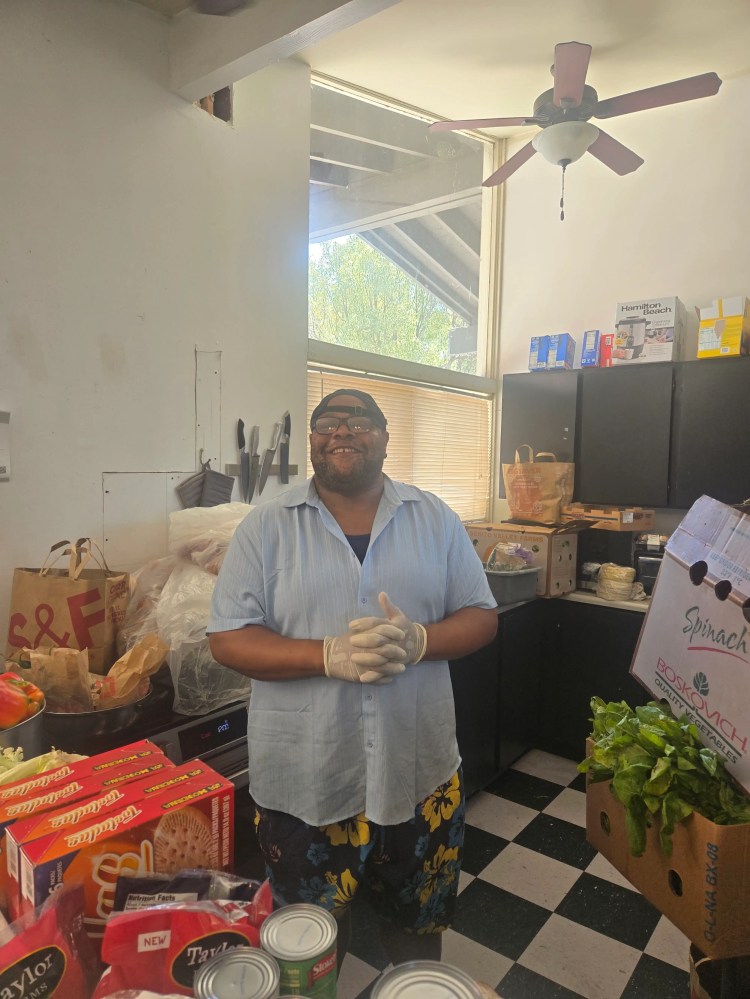
The CityHeART Resource Hub is located at 2291 W. Williams Street in Long Beach. It is a place where neighbors can access food, basic necessities, resource navigation, case management support, community connection, and someone who has time to listen.
That last part matters.
Sometimes a person arrives with a clear request. They may need groceries, help finding housing resources, support with a benefits application, or a connection to another organization.
Sometimes the need is less organized. A person may know only that something is not working and that they need a place to begin.
The Hub makes room for both.
There is an intake desk. There are shelves and tables for HeARTy Foods. There are welcoming places to sit. There may be coffee, conversation, art, a program, or a quiet moment before someone decides what they want to do next.

The Hub is not only a point of distribution. It is a point of relationship.
People are not asked to separate their practical needs from their emotional or creative lives. Food access can happen alongside a conversation. Resource navigation can happen alongside art-making. A case management connection can happen in a space where someone is treated as a whole person.
That is part of CityHeART’s trauma-informed approach. It is also part of what we mean when we say that we are made up of stories to be told, not problems to be fixed.
You can learn more about the wider CityHeART model through HeART of Survival and Art from Ashes, but the Hub is where many of those relationships meet in everyday life.
The Hub has become a HeARTline for frontline workers too
The Resource Hub is also a place that case managers and frontline staff across Long Beach contact multiple times each day.
They reach out when someone needs food, basic necessities, an immediate resource, or help bridging a gap their own systems cannot address quickly. They also contact us when a person needs more time, attention, or flexibility than an under-resourced frontline system can provide.
In that way, the Hub has become a HeARTline for frontline workers too.
This does not mean CityHeART can replace the systems that Long Beach needs. We cannot. It means that relationships across those systems help people stay connected when a referral alone is not enough.
A case manager may call because they have a neighbor in front of them figuring out how to access food that day. A frontline worker may need to locate a resource that is difficult to find through a directory. Someone may need a warm handoff instead of another phone number.
The Hub helps hold those connections.
What it takes to keep the door open
Keeping a physical space open requires more than a building. It requires people who can welcome neighbors, organize resources, respond to referrals, maintain relationships, and stay present when a situation does not fit neatly into a program category.
It also requires practical investment.
Each $100 invested protects one hour of this work and generates an estimated $500 in community value through direct services, volunteer time, donated resources, and partnerships.
That figure is an estimate of the combined value created through the Hub’s relationships and operations. It is not a promise of a financial return. It is one way of describing what a single hour can hold when staff time, volunteer effort, donated resources, and community partnerships work together.
We are looking at this clearly because clarity is part of care. We want to understand not only what the Hub means to people, but what kind of shared structure would be needed to keep it operating responsibly.
How you can participate before Labor Day
Between now and Labor Day, September 7, we are inviting you to weigh in.
Please reply and tell us how you are willing to participate. You might:
- Invest in a day of Resource Hub operations.
- Introduce CityHeART to someone who should be part of this conversation.
- Share the conversation cards with people, groups, businesses, or organizations in your circles.
- Participate with your time, skills, relationships, or leadership.
- Tell us what you believe Long Beach needs from a community resource hub in 2027.
- Share honestly if you believe the next chapter should look different.
You do not need to have a complete plan before reaching out. A thoughtful question, a useful introduction, or a clear perspective can help shape the conversation.
If you would like to respond directly, you can reply to Paige.
We are especially interested in hearing from people who have been close to the Hub’s daily life: neighbors who use the space, case managers who refer people, volunteers who help keep things moving, donors and partners who contribute resources, and community members who have been paying attention from a distance.
The next chapter belongs to more than one person
As a founder, I have a deep personal relationship with CityHeART. I also know that the organization has never belonged to me alone.
The Hub exists because people have brought their time, knowledge, care, food, art supplies, professional skills, lived experience, questions, and persistence into the same shared space.
The next decision needs that same kind of collective honesty.
Maybe Long Beach wants to keep writing this story with a physical Hub at its center. Maybe that requires a new level of shared leadership, more sustainable funding, stronger partnerships, or a different operating model.
Maybe the Hub’s work needs to change shape. Maybe CityHeART should focus its energy in another way, or build a more distributed model across the city.
We are open to hearing all of that.
The question is not whether CityHeART can carry the whole story by itself. We cannot, and we should not try.
The question is whether there is a community willing to help write what comes next.
So, Long Beach, what do you think?
During this pause, we are listening for more than approval. We are listening for commitment, concern, ideas, limits, and possibility.
If you want the Resource Hub to remain part of CityHeART’s story in 2027, tell us what participation could look like for you.
If you think the next chapter should be different, tell us that too.
Please reply by Labor Day, September 7. On September 30, Paige and the board will use what we hear, alongside the organization’s operational realities, to decide what comes next.
We are grateful for every person who has helped make the Hub a place where neighbors can find food, resources, creative expression, and someone willing to listen.
Now we are asking a simple, serious question:
Is this a story Long Beach wants to keep writing together?

Learn more about CityHeART and the programs, stories, and community connections that continue to grow around the Resource Hub.